
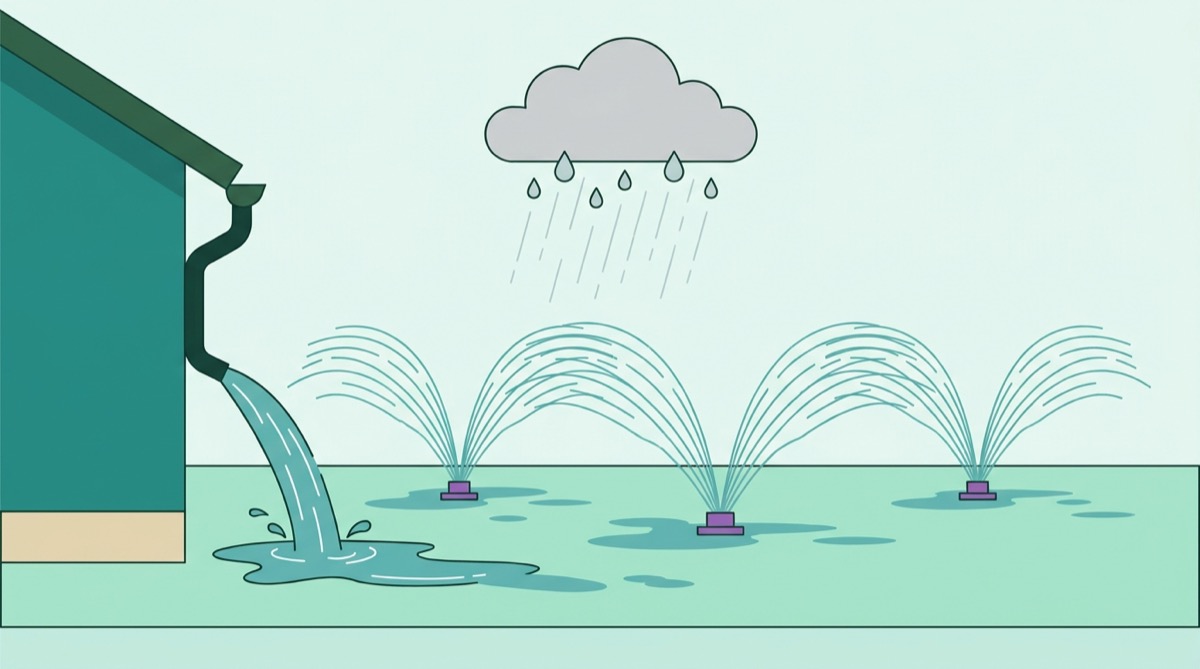
Aerobic septic sprinklers run when the pump tank fills, not when the lawn is dry. So one spray cycle during a shower can be normal. But if the sprinklers run noticeably more often in wet weather, or keep running through a storm, rainwater is probably getting into the system. That is worth fixing, because the extra water can push sewage through the tanks before it is treated.
Why rain should not change how often it sprays
The system is sized for the wastewater your household produces. The pump sends water to the spray heads when the level in the pump tank rises. If no one is using more water than usual, the number of spray cycles should stay about the same, rain or not.
Texas A&M AgriLife Extension gives two signs that rainwater may be infiltrating: an unexplained number of dosing cycles, or the spray system spraying during a rain shower.
How rainwater gets in
Tanks sit in an excavation that is backfilled with material that can hold water. If the system is not watertight, that collected water can enter the tanks. Texas A&M warns that it can then flush sewage through the treatment system and into the yard.
The usual entry points:
- A low spot over the tanks where rainwater collects.
- Riser lids that are cracked, loose or badly sealed.
- Leaking seams between the riser and the tank.
- A broken tank or pipe.
- Roof downspouts, footing drains or a sump pump wrongly connected to the wastewater plumbing.
- Runoff from a roof, driveway or slope flowing across the tank area.
Five checks you can do from the surface
Do these without opening any tank. They come from Texas A&M’s homeowner guidance.
- Look at the ground over the tanks. Has a depression formed where water could pond?
- Compare the grass. Unusually fast growth and a darker green around a tank or pipe run can indicate a broken tank or pipe.
- Check the risers and lids. Are they in good condition, sitting flat and sealed? Is soil or mulch piled against them?
- Follow the water. During rain, watch where roof and driveway runoff goes. It should run around the tank area and the spray field, not across them.
- Count the cycles. Note how often the sprinklers run on a dry day with normal water use, then on a wet day. Write down the difference for your provider.
Your provider can check one more thing with the lids open: staining on the inside of the riser and tank seams, which shows ground or surface water has been coming in.
What you can fix yourself
- Extend downspouts and redirect them away from the tanks and spray area.
- Regrade or fill low spots so water drains away from the lids. One manufacturer, Norweco, tells owners to keep finished landscaping below the top of the vented access cover and graded so runoff drains away from it.
- Keep mulch, plants and soil from burying or blocking lids and vents.
- Confirm that no gutter, sump pump or floor drain discharges into the house sewer line.
What to leave to your provider
- Resealing or replacing risers and lids.
- Repairing a cracked tank or broken pipe. In Texas, replacing a tank is treated as a repair that needs a permit.
- Anything that involves opening tanks or the control panel.
Other reasons the sprinklers run more than usual
- More water use: guests, laundry day, a filled tub.
- A leaking fixture. The U.S. Environmental Protection Agency notes a single running toilet can add up to 200 gallons a day.
- A float or timer fault that runs the pump when it should not. See sprinkler problems.
If the cycles increase in dry weather too, start with the toilet and fixtures, then call your provider.
When it is urgent
- The high-water alarm sounds during or after rain. See what to check when the alarm goes off.
- Water is pooling or running off the spray area toward a neighbor, a well or a ditch.
- The spray or the yard smells like sewage.
- Drains in the house are slow.
Cut water use and call your maintenance provider. If the control panel or tanks are under floodwater, do not touch the electrical equipment. See what to do after a power outage, which includes a section on flooding.
Why spray fields are designed for wet weather
Texas A&M explains that state rules require each spray system to be designed for the most wastewater the home is expected to produce, during the wettest season of the year, without water flowing onto neighboring property. That design covers your household’s wastewater. It does not cover rainwater leaking into the tanks. This is why a leak that seems minor can still cause runoff.
Sources
- Texas A&M AgriLife Extension, B-6234, Living with an Aerobic Treatment Unit and Spray Field, for how rainwater enters the system and the surface checks.
- Texas A&M AgriLife Extension: On-Site Sewage Facilities, Frequently Asked Questions, for diverting runoff and spray heads running during rain.
- Texas A&M AgriLife Extension, L-5303, Spray Distribution System, for the wettest-season design requirement.
- Texas A&M AgriLife Extension, B-6171, Homeowner’s Guide to Evaluating Service Contracts, for tank replacement being a permitted repair in Texas.
- U.S. Environmental Protection Agency: How to Care for Your Septic System, for keeping roof drains and sump pumps away and the running-toilet figure.
- Norweco, Singulair Green Owner’s Manual, for grading around access covers and prohibited connections.
General homeowner education only. Your permit, system manual and maintenance provider control the correct procedure for your installation.
Last reviewed: November 10, 2026.