
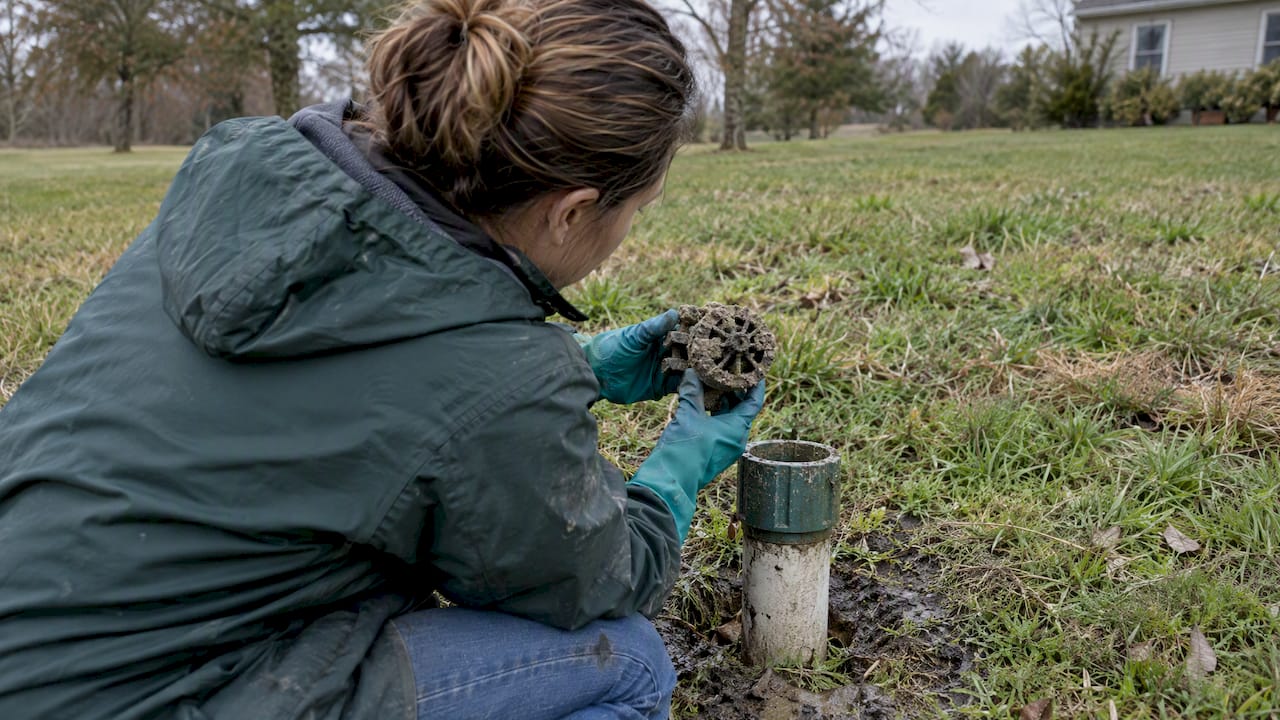
Most clogged septic sprinklers trace back to debris stuck in the nozzle or strainer, or to solids that have reached the dispersal system from an overloaded tank. Before touching any hardware, check your timer settings and listen for pump or compressor operation during the normal cycle. If cleaning a head doesn’t restore a normal spray pattern, or you notice signs of broader system failure, stop and call a licensed septic technician.
TL;DR:
- Most clog issues stem from debris in the nozzle or solids escaping from an overloaded tank, requiring system-wide inspection if cleaning doesn’t restore flow.
- Regularly verify the system’s timer, listen for pump operation, and check heads for spray irregularities before attempting cleaning.
- Proper nozzle cleaning involves turning off power, relieving pressure, thoroughly rinsing and brushing the part, and replacing damaged components with matching parts.
- Persistent nozzling problems usually indicate solids build-up in the tank or mechanical issues like a misconfigured timer, rather than just a clogged nozzle.
- Avoid DIY repairs inside tanks or electrical components; instead, contact licensed professionals if sewage surfaces, odors persist, or repeat clogs occur.
Table of Contents
- Fast diagnostic checklist to tell a clog from other issues
- How to clean or replace a clogged sprinkler head safely
- When cleaning a head won’t help: pump tank, solids, and timer issues
- Safety limits and clear red flags that require a licensed septic technician
- Practical maintenance habits and a short schedule to reduce clogs
- An honest look at DIY repairs versus calling a pro
- Where to download the maintenance schedule and component guide
- FAQ
- Sources
Fast diagnostic checklist to tell a clog from other issues
A clogged nozzle and a failing pump produce similar symptoms, so start by narrowing down the actual cause instead of jumping straight to cleaning. Aerobic systems typically run on timers, often overnight, and need enough effluent volume in the pump tank to trigger a dosing cycle, according to Oklahoma State University extension guidance. If your sprinklers are silent during the day, that may be normal operation rather than a malfunction.
Work through these checks before assuming a clog:
- Confirm your system’s timer schedule and whether you’re checking during its actual run window.
- Listen for the pump and air compressor cycling, and check the control panel for alarm lights or power loss.
- Inspect individual heads for misting, a weak or uneven pattern, or no spray at all.
- Check the pump tank level through its access port and look for unusual odors or signs of solids near the surface.
- Think back on recent changes at home, like extra guests, heavy laundry days, or recent rainfall, that could shift water flow.
Isolating one head at a time helps you figure out whether the problem is a single clogged nozzle or something affecting the whole field.
Pro Tip: Run the system manually in test mode, if your control panel allows it, so you can watch each head cycle without waiting for the overnight schedule.
How to clean or replace a clogged sprinkler head safely
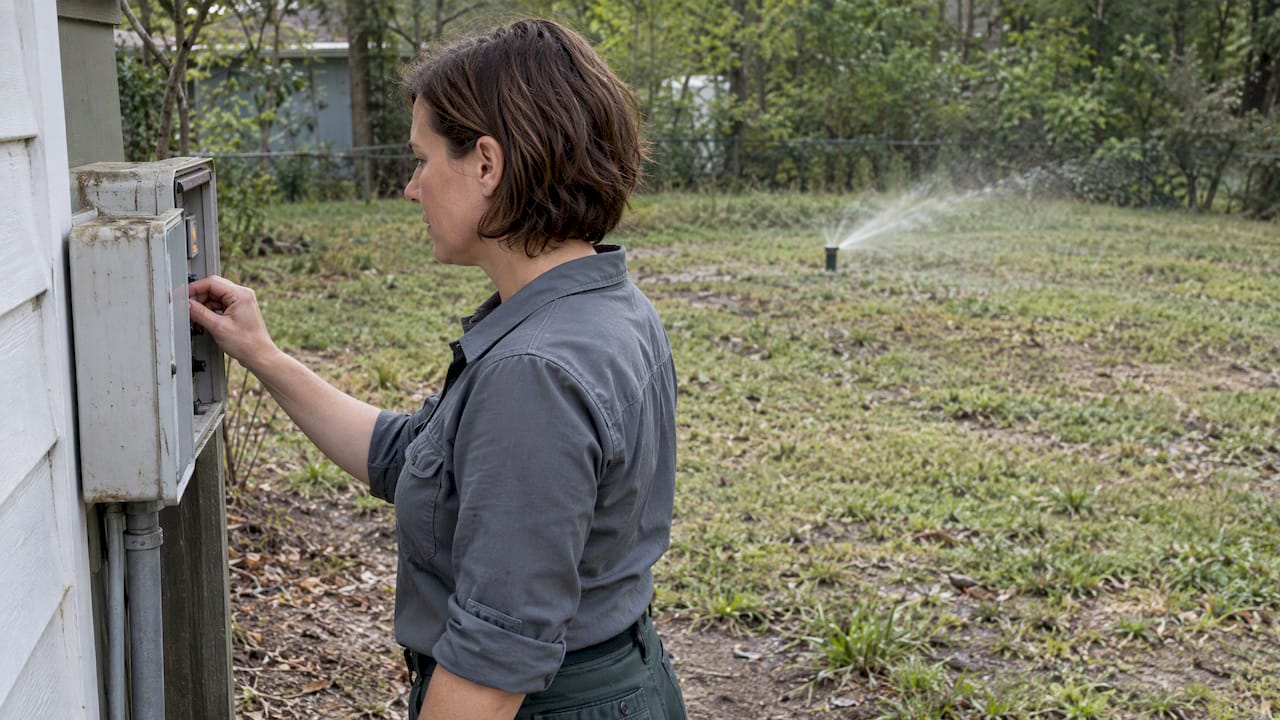
Before opening anything, turn off power to the system at the control panel and let pressure bleed from the line. Wear gloves and eye protection, since effluent spray can carry bacteria even after treatment.
Gather basic tools first: an adjustable wrench, a small wire or nylon brush, a bucket of clean water, and a replacement nozzle or strainer that matches your existing part. Mismatched threads or flow rates can throw off your spray pattern, so bring the old part with you or note the brand when shopping for a replacement.
- Shut off power to the pump and compressor, then relieve pressure in the supply line before disassembly.
- Unscrew the sprinkler head or riser cap and remove the nozzle or strainer insert.
- Rinse the part in a bucket of clean water and use a soft brush to clear debris from the mesh or orifice.
- Inspect the part for cracks, worn threads, or mineral buildup that cleaning won’t fix.
- Reinstall the cleaned or replacement part, hand-tighten, and restore power.
- Run a test cycle and confirm the spray pattern looks even and consistent with nearby heads.
Pro Tip: Photograph the old part before you remove it, so you have a reference if the replacement doesn’t match the thread pattern exactly.
A short list of things to avoid: don’t pour caustic drain cleaners into any septic component, don’t open the electrical control panel unless you’re trained to do so, and never attempt to pull a pump from a tank by yourself. These tasks carry real injury risk and are better left to a licensed professional, as Texas A&M AgriLife Extension points out.
When cleaning a head won’t help: pump tank, solids, and timer issues
If you clean a nozzle and it clogs again within days, the problem usually isn’t the nozzle itself. Sludge and scum that accumulate in the tank can allow solids to escape into the dispersal lines, repeatedly fouling nozzles no matter how often you clean them, according to system-owner manual guidance. Insufficient pump-tank volume or a misconfigured timer can also make heads appear clogged when the real issue is that a cycle simply isn’t triggering with enough force.
Biofilm and mineral scale inside pipes and nozzles build up gradually, especially in systems where disinfection components aren’t maintained on schedule. Watch for these signs that point to a system-level problem rather than a single dirty part:
- Effluent pooling or surfacing near the dispersal field, even in dry weather.
- Grass that’s noticeably greener or lusher directly over the spray area.
- Slow drains or gurgling sounds inside the house.
- A sewage odor that persists outdoors near the tank or field.
If you see any of these, open the tank access port (carefully, and only the lid, not internal components), note what you observe, and schedule a pump-out. Document the date, the technician’s findings, and any parts replaced, since that record becomes useful if the problem recurs.
Safety limits and clear red flags that require a licensed septic technician
Some repairs are simply outside the scope of safe DIY work. Electrical connections, pump removal, and any work inside a tank are hazards that should go to a licensed professional, since confined spaces can contain dangerous gases and pumps are heavy, often submerged, and wired into power you shouldn’t handle without training.
Stop and call a professional if you notice any of the following:
- Sewage surfacing on the lawn or pooling near the tank or field.
- Repeated plumbing backups or slow drains inside the house.
- A persistent sewage smell that cleaning doesn’t resolve.
- A sprinkler head that clogs again within a week of cleaning.
A licensed technician’s visit typically includes an inspection of the tank, pump, and dispersal components, a pump-out if sludge levels warrant it, and replacement of any failed parts, with extension guidance noting that simple homeowner checks like isolating a single head can save time and avoid unnecessary digging. Ask for a written summary of what was found and fixed, and keep it with your own photos and notes. That record helps the next technician, or you, diagnose a repeat issue faster.
Practical maintenance habits and a short schedule to reduce clogs
A short, consistent routine prevents most clogs before they start. Check sprinkler heads and the pump tank access monthly, note any alarm activity, and keep a running log of what you observe.
- Monthly: walk the spray field, check each head visually, and glance at the control panel for alarms.
- Quarterly: look for sludge or scum buildup near the tank access and watch for slow drains.
- Annually: schedule a professional inspection and pump-out based on what your inspections show.
- Ongoing: avoid flushing wipes, limit back-to-back heavy laundry loads, and route water-treatment backflush away from the septic system.
| Frequency | Task | Why it matters |
|---|---|---|
| Monthly | Visual check of heads and pump-tank access | Catches a dirty nozzle before it fully clogs |
| Quarterly | Check for sludge, scum, or odors at tank access | Flags solids buildup before it reaches dispersal lines |
| Annually | Professional inspection and pump-out as needed | Removes sludge that causes repeat clogging |
Keeping a simple log of these checks, along with pump-out dates, protects your dispersal field and gives any technician a clear history to work from.
An honest look at DIY repairs versus calling a pro
We build our guides around the common questions aerobic septic system owners run into. The honest answer is that cleaning a nozzle is safe and often all you need, but repeated clogs almost always point to a tank or timer issue that cleaning alone won’t fix. Pairing basic DIY checks with scheduled professional service tends to produce the best long-term outcome for homeowners who want to avoid costly surprises.
— Alex
Where to download the maintenance schedule and component guide
We keep a free maintenance schedule you can print and use to log inspections, pump dates, and repairs as you go.

Pairing it with our component explainer makes it easier to identify parts when you’re shopping for a replacement nozzle or strainer. Save both, and start logging your next inspection today.
FAQ
How often should septic sprinklers go off?
Aerobic sprinkler systems typically run on a timed schedule, often overnight between about 1:00 a.m. and 6:00 a.m., and only when the pump tank holds enough effluent to trigger a cycle, according to extension guidance. If your sprinklers seem silent during the day, that’s usually normal rather than a sign of malfunction.
Why are my septic sprinklers not spraying?
The most common causes are a clogged nozzle or strainer, a pump that isn’t cycling, or a tank that hasn’t reached the volume needed to trigger dosing. Checking the timer and listening for pump operation, as described in our sprinkler heads not spraying guide, usually narrows down the cause quickly.
Can you unclog a drainfield?
A clogged drainfield is a different problem from a clogged sprinkler head and generally can’t be cleared with homeowner tools. Persistent clogging usually points to sludge and solids carryover from the tank, which calls for professional inspection and pump-out rather than DIY repair.
Why do the septic sprinklers keep going off?
Repeated cycling that seems excessive can mean a stuck timer, a failing float switch in the pump tank, or household water use that’s higher than usual. Reviewing recent changes at home, like extra laundry or guests, alongside a check of the control panel settings, usually points to the cause.
Sources
These extension and public health resources informed the guidance in this article, and we recommend them for anyone who wants more technical depth or jurisdiction-specific rules:
- Aerobic Treatment System | Oklahoma State University
- Aerobic Treatment Unit and Spray Field | Texas A&M AgriLife Extension
- An Onsite Wastewater Treatment System Owner’s Manual
Local codes vary, so check with your county health department or a licensed provider before making repairs that affect permitting or warranty coverage.
Recommended
- Aerobic Septic System Maintenance Checklist for New Homeowners
- Aerobic Septic System Repair or Replacement: How to Decide
- Aerobic Septic Sprinkler Heads Not Spraying: What It Means
Created with BabyLoveGrowth AI
Related guide
This guide is the procedure: how to clear a head safely, and where the job stops being a homeowner job. If you are still working out why the heads are not spraying — one head or all of them, a pump fault, a line break, or simply a dosing cycle you were not expecting — start with what it means when sprinkler heads are not spraying. Diagnose first, then act.