
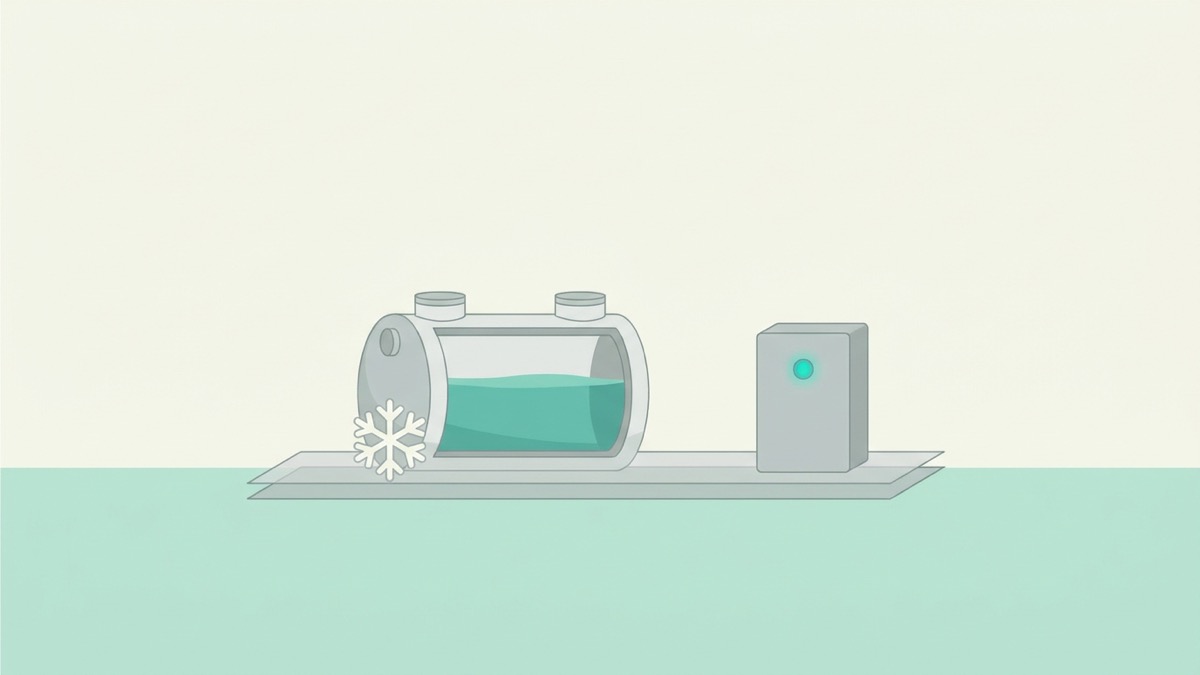
Most aerobic septic systems get through winter without trouble, but cold weather can freeze pipes, slow treatment, and turn a small leak or a gap in snow cover into a service call. The safest winter plan is simple: keep warm wastewater flowing in normal amounts, keep traffic and snow piles off the system, keep lids sealed, and call your provider at the first sign of a freeze instead of trying to thaw anything yourself.
This guide is general information drawn from university extension and state agency sources. Most of that guidance was written for septic systems in general, so where it may not fit an aerobic system with a spray field, we say so. Your manual, your permit and your maintenance provider decide what applies to your property.
Cold weather: what to do now
| What is happening | What it can mean | What to do |
|---|---|---|
| A hard freeze is coming | Pipes and shallow lines are at risk | Spread warm-water use through the day, fix drips, keep vehicles and snow piles off the system, and check from the surface that lids are in place |
| The house will be empty for a week or more | Too little warm water reaches the system | Ask someone to use warm water regularly, and increase use gradually when you return |
| Drains slow or back up in very cold weather | A possible frozen line | Cut water use and call your provider |
| The alarm comes on, or the sprinklers stop, during a cold spell | A possible freeze, though there are other causes | Write down what you see and call your provider |
| You hear water running constantly in the pump tank | It can indicate a frozen system | Call a professional. Turn the pump off only if your manual or provider has shown you a safe way |
| Seeping or ponding over any part of the system | Wastewater may be reaching the surface | Keep people and pets away and call your provider |
Do not try to thaw anything yourself, and do not add mulch to a system that is already frozen.
Why cold weather matters for an aerobic system
An aerobic treatment unit (ATU) relies on bacteria, air from an air pump, and in many cases a pump that sends treated, disinfected effluent to spray heads or a drip or drain field. Cold affects several of those parts at once:
- Treatment slows down. University of Nebraska–Lincoln Extension notes that bacteria in a septic tank stop working properly once the tank reaches about 39°F, and that the digestion process does not produce heat to keep the tank warm. Warm wastewater from the house is what keeps the system working.
- Water can freeze where it stands still. The University of Minnesota Onsite Sewage Treatment Program lists pipes with low spots, sags or too little slope, and pump lines that dip where backfill has settled, as common places where wastewater pools and freezes.
- Frost goes deeper when insulation is missing. Little snow cover, compacted snow or soil, and open or broken lids all let cold reach the system faster.
To see where these parts sit on a typical property, read what an aerobic septic system looks like.
What makes a septic system more likely to freeze
The University of Minnesota and the Minnesota Pollution Control Agency (MPCA) describe the same risk factors:
- Little or no snow cover over the tank, pipes and treatment area.
- Compacted snow or soil from vehicles, foot traffic or animals, including over the line between the house and the tank.
- A system installed late in the year, before grass or other cover was established.
- Long periods with no one home, or very low water use, so little warm water reaches the system.
- Small, steady drips from leaking fixtures, or condensate from high-efficiency furnaces and humidifiers, which can freeze in pipes.
- Open, broken or uncapped risers, inspection pipes or manhole covers that let cold air in.
- A system that is already failing hydraulically, with effluent surfacing or seeping, which freezes easily.
How to prevent freezing
Keep warm water flowing, in normal amounts
UNL Extension suggests spreading warm-water use through the day and the week, for example running the dishwasher in the morning and laundry in the evening. The MPCA gives the same advice and adds a clear limit: do not leave water running all the time, because continuous flow can overload the system. If you have many guests over the holidays, our guide to how much water an aerobic system can handle explains why spreading loads matters.
Fix drips and route condensate away
North Dakota State University Extension points out that dripping faucets and leaking toilets send a small, continuous flow that can freeze in the sewer pipe where it leaves the house. Repair leaks before winter. The University of Minnesota suggests routing condensate from high-efficiency furnaces away from the septic system or protecting that line, and the Texas A&M AgriLife guide to living with an ATU makes a related point: air-conditioning condensate is not sewage and should be routed around the system.
Keep traffic and snow piles off the system
All four extension and agency sources agree: keep cars, ATVs, snowmobiles, livestock and regular foot traffic off the tank, the pipes and the treatment area, and do not plow or stockpile snow there. Compacted snow insulates poorly, and UNL notes that compaction in winter can force frozen solids into a drainfield. On an aerobic system with a spray field, the same caution applies to the lines that run to the spray area.
Let snow and grass insulate
Snow is a good insulator. The University of Minnesota suggests leaving grass a little longer over the tank and treatment area in late summer and fall so it catches snow, and NDSU suggests snow fences to hold snow over exposed spots, especially on the north and west sides, where wind often leaves little cover.
Add insulation where your provider agrees
The Minnesota sources recommend 8 to 12 inches of loose mulch such as straw, leaves or hay over the pipes, tank and soil treatment area of a conventional system, plus insulated pipe or foam panels where needed. Two cautions for aerobic owners:
- Do not cover spray heads or the area they spray. Ask your provider whether mulch or insulation over buried lines and tank lids is appropriate for your design.
- Do not add mulch to a system that is already frozen. The MPCA warns it will delay the spring thaw.
Keep every lid closed and sealed
Open, broken or uncapped risers and inspection ports let cold air in. Check from the surface that lids are in place and undamaged, and report any damage to your provider. Do not open lids yourself; our guide to septic tank risers explains why access belongs to a qualified provider.
Plan for time away
If the house will be empty for a week or more, the MPCA suggests having someone use warm water regularly. UNL suggests asking someone to run a load of laundry or dishes now and then, and notes that a certified professional can add insulation or a tank heater for seasonal or vacant homes. When you return, the Texas A&M guide recommends increasing water use gradually over the first couple of days. Many aerobic systems also depend on power for the air pump and controls; if winter storms cut the power, see what to do after a power outage.
Signs your system may be freezing
- Drains in the house slow down or back up in very cold weather.
- The alarm on the control panel comes on. See what to check when the alarm goes off.
- The University of Minnesota notes that water heard running constantly in a pump tank can indicate a frozen system.
- Spray heads stop spraying during a cold spell. Our guide to sprinkler heads that are not spraying covers other causes too.
- Seeping or ponding over any part of the system.
For a symptom-by-symptom overview, use our troubleshooting guide.
If the system freezes: what to do
- Call your maintenance provider or a licensed septic professional. The University of Minnesota stresses that unless the cause is fixed, the system will likely freeze again. Professionals use tools such as pipe cameras, steamers, high-pressure jetters, heat tape and tank heaters.
- Cut water use. Limit toilet flushes, take short showers, run only full dishwasher loads, and consider a laundromat until the system is working.
- Ask about temporary holding. If thawing is not feasible, the Minnesota sources describe using the tank as a temporary holding tank, emptied by a licensed professional as it fills, until the ground thaws. Whether that is possible for an aerobic unit depends on its design, so ask your provider.
- Follow instructions on the pump. If you hear a pump running constantly, the University of Minnesota advises turning the pump off and calling a professional. Only do this if your manual or provider has shown you a safe way that does not involve opening a panel or touching wiring.
What not to do
The MPCA and the University of Minnesota list the same don’ts:
- Do not add antifreeze, salt or septic additives.
- Do not run water continuously to try to unfreeze the system.
- Do not light a fire over the system to thaw it.
- Do not pump sewage onto the ground surface.
Also, do not open tanks, adjust the air supply, timer or floats, or try to thaw spray lines or electrical components yourself. On many permitted aerobic systems that work belongs to licensed personnel and may be covered by your maintenance contract.
Winter checklist for aerobic septic owners
- Leaks fixed and condensate lines routed away before the first freeze.
- Lids, risers and inspection ports in place and undamaged (observed from the surface).
- No parking, plowing or snow piles over the tank, lines or spray area.
- Warm-water use spread through the day; no water left running.
- A plan for anyone house-sitting during long trips.
- Your provider’s phone number and your service call log where you can find them.
- Ask about cold-weather checks at your next service visit.
FAQ
Can an aerobic septic system freeze in the South?
Hard freezes are less common in Texas, Louisiana or Florida, but exposed pipes, shallow lines and pump lines can still freeze in a cold snap. The same basics apply: keep warm water flowing in normal amounts, keep lids sealed, and call your provider if drains slow or the alarm sounds.
Should I leave a faucet dripping to keep the septic lines from freezing?
No. NDSU Extension warns that small continuous flows can freeze in the sewer pipe, and the MPCA says not to leave water running, because it can overload the system.
Can I pour antifreeze or salt into the system?
No. Both the MPCA and the University of Minnesota say not to add antifreeze, salt or septic additives.
Does treatment stop in cold weather?
Treatment slows as the system cools. UNL Extension notes that bacteria in a septic tank stop working properly at about 39°F, which is why steady warm water from the house matters. Ask your provider how your model performs in cold weather.
Free email lessons for aerobic septic owners
You confirm by email before Lesson 1 is sent. See our privacy policy.
Sources
- University of Minnesota Onsite Sewage Treatment Program, Seasonal care
- Minnesota Pollution Control Agency, Don’t let your septic system freeze
- University of Nebraska–Lincoln Extension, Minimizing the impact of winter weather on water and wastewater systems
- North Dakota State University Extension, Precautions can prevent frozen septic systems
- Texas A&M AgriLife Extension, Living with an Aerobic Treatment Unit and Spray Field (PDF)