
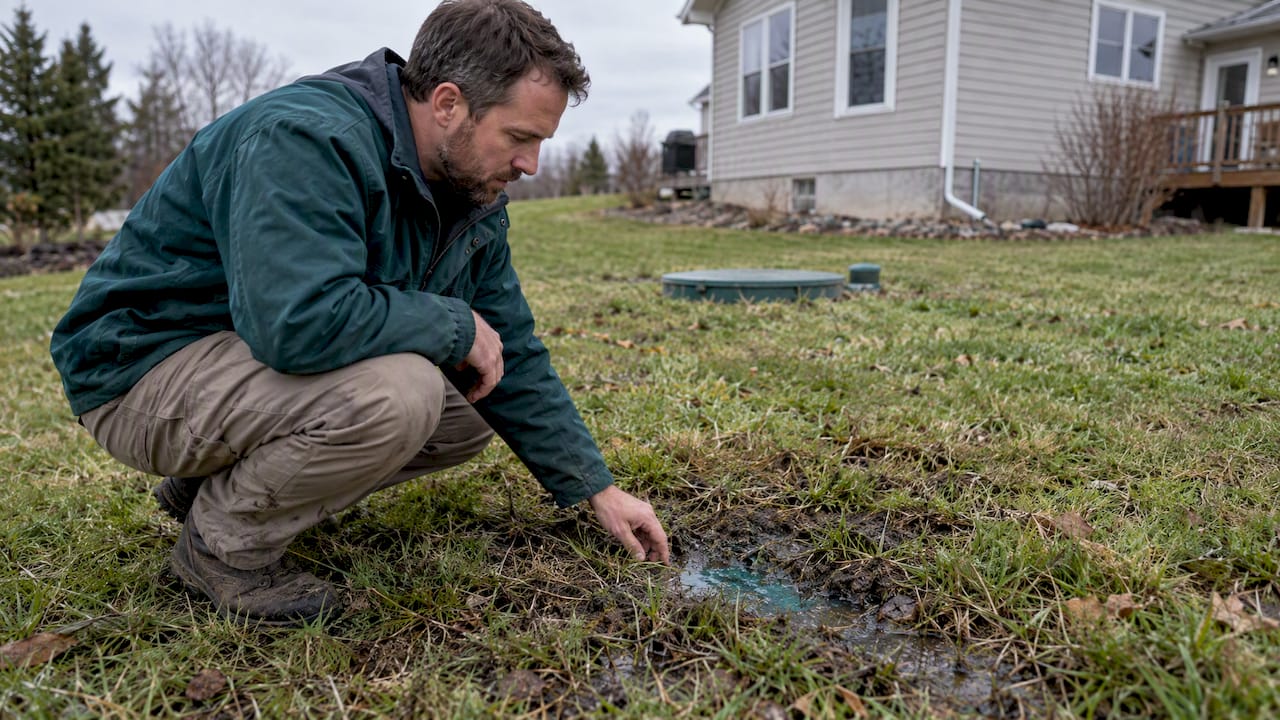
A septic dye test is a tracer check that a health department or qualified inspector runs to see whether wastewater reaches a specific spot, such as a ditch or shoreline. A positive result shows a connection to that spot. A negative result does not prove the system is healthy. It is not a do-it-yourself test.
Table of Contents
- What a septic dye test can tell you (and what it won’t)
- How to arrange a dye test safely
- Why dye tests can mislead: false negatives and false positives
- If dye appears: documentation, who to call, and repair paths
- Who to call
- Prevention and maintenance: lower your odds of ever needing this test
- When a dye test is actually worth running
- Where our checklists help after a dye test
- FAQ
- Sources
What a septic dye test can tell you (and what it won’t)
A dye test answers one narrow question: does wastewater from this house reach this specific surface location? It does not tell you why, how bad the problem is, or whether other parts of your system are failing. Dye confirms connectivity, not cause, and it offers no information about tank condition, drainfield capacity, or bacterial contamination levels on its own.
What a positive dye test can help you spot:
- Ponding or standing water above the drainfield or near the tank
- Unusually lush, green grass patches in dry weather
- Visible seepage or colored water in nearby streams, ditches, or lakeshores
A negative result is where homeowners get misled. Extension guidance points out that slow drains, backups, and lush patches are often better early indicators than a one-time dye flush, and routine maintenance records catch problems a single test can miss, according to university extension guidance. A clean dye test is reassuring, but it is not a certificate of system health.
How to arrange a dye test safely
Ask your local health department or qualified septic inspector whether a tracer test is appropriate and which protocol applies. The professional should select the tracer, dose, water-loading conditions, observation period and any laboratory sampling. These vary by site and cannot be replaced by a universal household recipe.
As one example, Thurston County, Washington, describes a four-week process run by its staff, using charcoal packets and lab confirmation. It says dye tests “do not find all possible problems.”
- Prepare your permit, system layout and maintenance records.
- Record existing wet areas from a safe distance before testing.
- Keep people and pets away from suspected wastewater.
- Do not open tanks, enter chambers or add extra water to a system that is backing up or surfacing sewage.
- If sewage is already visible, reduce water use and contact your service provider and local health office promptly.
Why dye tests can mislead: false negatives and false positives
A negative result does not prove the system is working. As one example, Thurston County says dye tests “do not find all possible problems,” and it uses a lab to confirm dye. Ask the inspector what a negative result can and cannot rule out on your site, and whether lab confirmation is part of the test.
If dye appears: documentation, who to call, and repair paths
A positive result is a starting point, not a diagnosis. Document everything before you call anyone: photos of the dye at its surfacing point, a rough map of your property showing where and when it appeared, and timestamps for each observation. If your county issued charcoal packets or samples, preserve them exactly as instructed since a lab may need them for confirmation.
Next steps in order:
- Contact a state- or locally certified septic professional for a full inspection, not just a repeat dye test
- Expect a site evaluation that may include soil assessment, tank inspection, and a check of the distribution system
- Ask whether a repair permit is required in your area before any work begins
- Request a written scope of the diagnosis and the proposed fix
Typical outcomes range from a targeted pipe or baffle repair to drainfield restoration or, in more serious cases, full system replacement. Some professionals also recommend a follow-up lab test for bacteria to confirm the issue is resolved after repairs. Timelines generally move from inspection to permit to repair, and having your maintenance history on hand speeds up the permit or repair-versus-replacement decision.
Who to call
- Your county or parish health department, or your state onsite program: ask whether they run dye tests and which protocol applies.
- A certified or licensed septic inspector: for a full inspection, not just a repeat dye test.
- Your maintenance provider (aerobic systems): report where the dye appeared and ask what they will check.
Buying or selling? A dye test checks one location. Ask for the permit, maintenance contract and service reports too. See our inspection checklist and red flags before you buy.
Prevention and maintenance: lower your odds of ever needing this test
Routine care helps identify problems before they worsen. Conventional septic pumping guidance does not establish a schedule for every aerobic treatment unit. Use measured solids, the manufacturer’s instructions, permit conditions and your service provider’s assessment to plan pumping.
- Space out heavy laundry and dishwasher loads to avoid hydraulic overload on the drainfield
- Fix leaking fixtures promptly since steady extra water stresses the system
- Keep vehicles, heavy equipment, and new soil or structures off the drainfield
- Choose shallow-rooted grass over trees or deep-rooted plants near the field
Pro Tip: Keep a simple log of pump-outs, inspections, and any issues using a downloadable maintenance record, so you have a documented history ready whenever a professional asks for one.
When a dye test is actually worth running
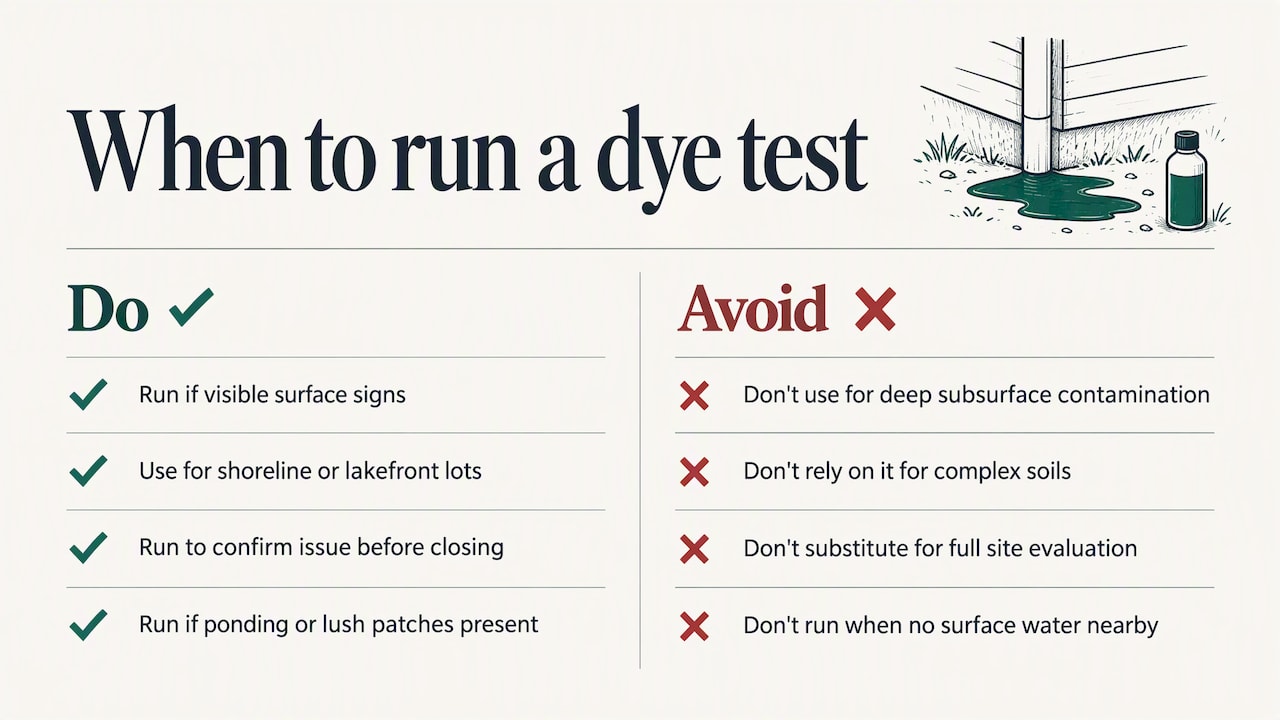
Dye testing earns its keep when you already see surface signs, you’re dealing with shoreline or lakefront property, or a real-estate deal hinges on confirming a visible symptom before closing. It’s a weaker tool for suspected deep subsurface contamination or complex soils, where a full site evaluation serves you better.
Before testing, run through this: do you see ponding or lush patches, what does your maintenance history show, is there pressure from a buyer or seller, and is surface water nearby?
Where our checklists help after a dye test
We built our maintenance schedule and red-flag checklist so you walk into an inspection with answers ready instead of guessing what a contractor will ask.
- Bring a filled-out maintenance log so a professional can see pump-out dates and past issues at a glance
- Use our component guide to point out your tank and entry points before anyone arrives
- Download the records free and keep them updated as part of your routine care
Visit our resources page to grab the checklists and start building a record your septic professional will actually use.
FAQ
How long does a sewer dye test take?
There is no universal result time. The observation period depends on the site and the approved testing protocol; some investigations require repeated sampling. Ask the inspector when results can be interpreted and what a negative test cannot exclude.
How long does septic dye last?
There is no fixed time. Ask the inspector how long the test runs and whether a lab confirms the result. Thurston County, for example, runs its test over four weeks with lab processing.
How can you tell if your drainfield is bad?
Common warning signs include slow drains, sewage backups, and unusually lush or soggy patches of grass over the field, according to university extension guidance. These symptoms often appear before or alongside any dye surfacing and are worth tracking even without a formal test.