

If you need to pay for septic repair or replacement, start with the program that matches your situation: USDA Section 504 for eligible rural homeowners, FHA 203(k) if you are buying or refinancing, or your state’s clean water fund through a local agency. Call your health department and the program office first. This is not financial advice.
Table of Contents
- Which financing route fits your situation?
- Comparing your septic financing options side by side
- How do you pick the right financing path for your situation?
- What does the application process actually look like?
- What if you don’t qualify for a grant or program loan?
- Practical tips that speed up your application
- Documents to prepare before you call
- Free resources that help you prepare your application
- FAQ
- Sources
Which financing route fits your situation?
Five paths cover most homeowners looking to pay for a new aerobic system, a repair, or a replacement. Each serves a different profile, and picking the wrong one wastes weeks.
The EPA’s Clean Water State Revolving Fund can finance decentralized wastewater projects, including septic installation and replacement, but access varies by state. Most states do not lend directly to homeowners and instead route CWSRF dollars through municipal or county intermediaries, so a pass-through loan from your local utility or health department is often the practical entry point.
Local options round out the list:
- Community development financial institutions, like the Solar and Energy Loan Fund’s Septic to Sewer program, offer locally administered loans, sometimes with utility-bill repayment.
- State-specific programs such as PENNVEST in Pennsylvania provide septic-specific loans with their own limits and application steps.
- Contractor financing and home equity borrowing serve as stopgaps when program funds are delayed or you don’t qualify for assistance.
Comparing your septic financing options side by side
Programs differ most in who qualifies, what the money can cover, and whether the lender places a lien on your property. A side-by-side view makes the tradeoffs clearer before you call anyone.
| Program | Who it’s for | What it covers | Typical maximum | Repayment / lien | How to apply |
|---|---|---|---|---|---|
| USDA Section 504 | Eligible rural owner-occupiers with low or very low income for loans; grants require age 62+ and very low income | Health and safety repairs including septic | Loans up to $40,000, grants up to $10,000, combined up to $50,000 (USDA) | Loans: 1% fixed interest for 20 years. Grants must be repaid if the home sells in less than 3 years. | Local USDA Rural Development office |
| FHA 203(k) | Buyers or owners refinancing with rehab needs | Nonstructural repairs (Limited) or major rehab (Standard), including septic work | Limited 203(k) has a set financeable cost cap per HUD guidance (HUD) | Standard mortgage terms through an FHA-approved lender | FHA-approved 203(k) lender or HUD-certified counselor |
| CWSRF / state pass-through | Homeowners in participating states, often via local utility | Decentralized wastewater system installation or replacement | Set by individual state program | Varies by state, often municipal lien or assessment | Local health department or state environmental agency |
| PENNVEST (state example) | Pennsylvania homeowners needing septic repair or replacement | Septic repair and replacement | Confirm current limits and availability with PHFA (PHFA) | Terms up to 20 years in program materials | PHFA or DEP-affiliated program staff |
| CDFI / nonprofit loan funds | Homeowners outside traditional bank lending | Septic-to-sewer conversion or replacement | Varies by fund and project | Collateral, rates and repayment depend on the fund; request written terms | Direct application through the fund |
USDA Section 504 figures checked October 15, 2026, on rd.usda.gov. Other rows: confirm current terms with the administering agency.
Pro Tip: Ask each program whether work may start before approval. Some programs may not pay for work that began earlier.
How do you pick the right financing path for your situation?
Match your circumstances to the option most likely to approve you, rather than applying everywhere at once.
- Check income and occupancy first. USDA Section 504 requires owner-occupancy in an eligible rural area and inability to obtain affordable credit elsewhere. Loan income limits cover low and very low income; grants require very low income and age 62 or older.
- Decide if you’re buying, refinancing, or staying put. FHA 203(k) only works if a purchase or refinance is already part of your plan.
- Size the project. A simple repair may qualify for a smaller state or CDFI loan, while a full system replacement may need the larger ceiling of a USDA or CWSRF program.
- Ask whether a lien applies. Some programs place a lien or repayment clause on the property, which matters if you plan to sell soon.
- Confirm permit timing with every program you contact. Ask directly whether you can get bids before approval, and whether work must wait until funding clears.
If you don’t qualify for any grant or low-interest program, a repair-versus-replacement decision still shapes your next move. Our repair or replacement guide walks through that choice in detail. If you are buying a home with an aerobic system, our inspection checklist shows what to confirm before you budget for repairs.
What does the application process actually look like?
The sequence is largely the same across programs, even though timelines vary by agency workload and your state’s participation.
- Contact your local health department first. Confirm permit requirements and whether your proposed system design meets local code before you request bids.
- Get written bids from licensed installers. Most programs require at least one, and some require multiple, itemized estimates tied to a specific system design.
- Reach out to the program administrator. This might be a USDA Rural Development office, an FHA-approved 203(k) lender, or your state CWSRF contact, depending on which route you chose.
- Expect inspections and draw schedules. Funds are frequently released in stages tied to permit sign-off and completed work, not as a single upfront payment.
About one in five U.S. households rely on decentralized wastewater systems such as septic (EPA). Our installation cost breakdown helps you estimate what bids to expect before you apply.
What if you don’t qualify for a grant or program loan?
Several private and short-term options exist alongside, or instead of, government programs.
- Home equity loans or lines of credit let you borrow against your property’s value, but they place a lien on your home and reduce your equity cushion.
- Contractor financing or in-house payment plans can speed up the timeline, so get every term, fee, and penalty in writing before signing.
- Personal loans or credit cards cover emergencies but typically carry higher costs than program loans, so treat them as a last resort rather than a first choice.
- Combining partial grant assistance with private financing is common when a USDA grant covers part of the cost and a home equity loan or contractor plan fills the gap.
Practical tips that speed up your application
Documentation is the single biggest friction point in septic financing applications. Keep maintenance logs, prior inspection reports, permits, and any as-built drawings of your system organized before you contact a program office.
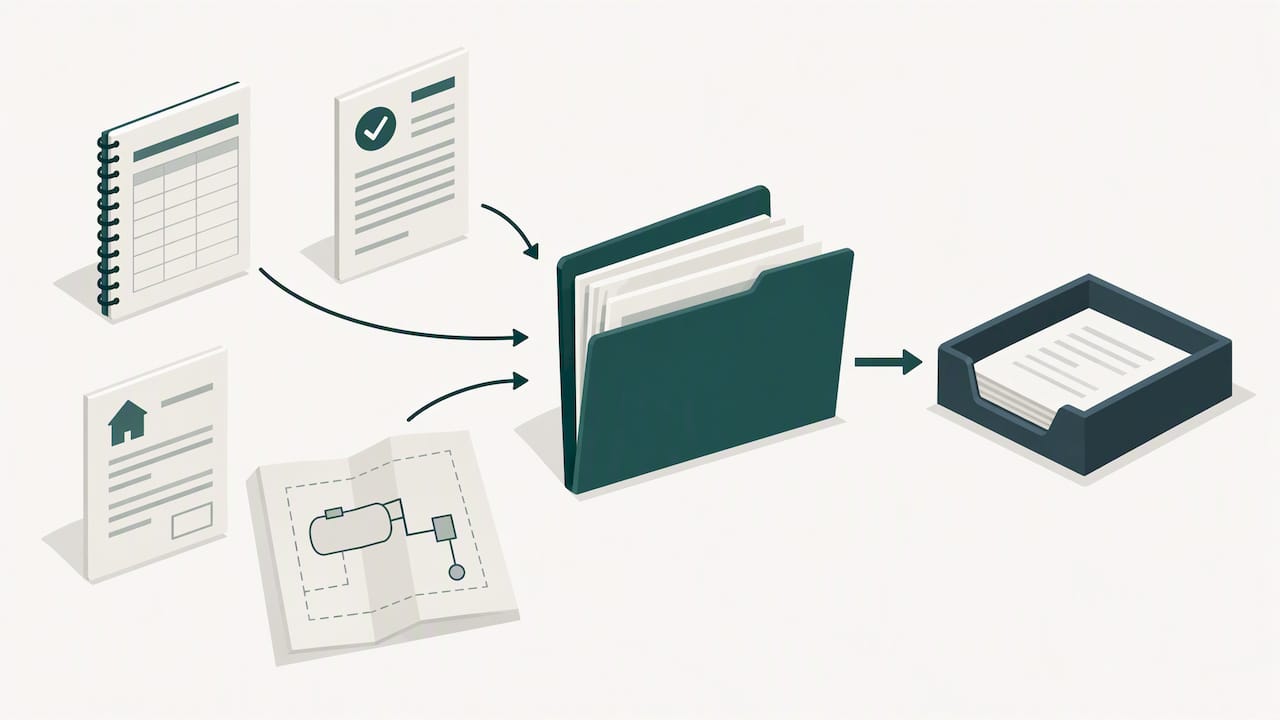
Common application problems are starting work before approval, skipping the permit step, and submitting only one contractor bid when a program requires several. Our repair or replacement guide and maintenance cost breakdown both help you gather the numbers program administrators ask for.
Pro Tip: Request your septic permit and system design documents before your first call to a lender or program office; having them ready can shave real time off the review process.
Documents to prepare before you call
- Your septic permit and approved system design.
- Service reports and your maintenance record.
- Any inspection report that describes the problem.
- Written, itemized bids from licensed installers.
- Proof of ownership, occupancy and household income (for USDA Section 504, your local Rural Development office lists the forms).
Our repair or replace guide helps you decide what scope to ask for in bids.
Free resources that help you prepare your application
We built our downloadable tools because a disorganized paper trail is one of the easiest ways to stall a financing application. A maintenance log and a clear repair-versus-replacement decision save you time when a program administrator asks for history and documentation.
- Download our maintenance record to build a documented service history before you apply.
- Use our repair or replacement guide to decide what scope of work to request in your bids.
- Visit our resources page for the full set of free checklists and printable tools.
FAQ
Can you do payment plans on a septic system?
Some installers or local loan programs may offer payment plans. Terms vary, so ask each one directly. Get the schedule, interest, fees and any penalties in writing before you sign.
Can you finance a new septic system?
Yes, through options including USDA Section 504 loans and grants, FHA 203(k) when paired with a purchase or refinance, state CWSRF pass-through programs, CDFI loans, home equity borrowing, and contractor financing. Which one fits depends on your income, whether you’re buying or staying, and your state’s program availability.
How do you pay for a new septic system with little cash on hand?
Start by checking USDA Section 504, since grants are available to qualifying homeowners age 62 and older, with combined loan and grant assistance up to $50,000 where eligible; the 1% rate applies to the loan portion only.
What determines whether a system is more affordable to install?
System cost depends on soil conditions, required design, and local permitting rather than a fixed price, so our installation cost guide breaks down the variables that drive your bids. Getting multiple written estimates is the most reliable way to see your actual range before applying for financing.
Sources
Program information checked October 8, 2026. Confirm current eligibility and funding directly with the administering agency.