
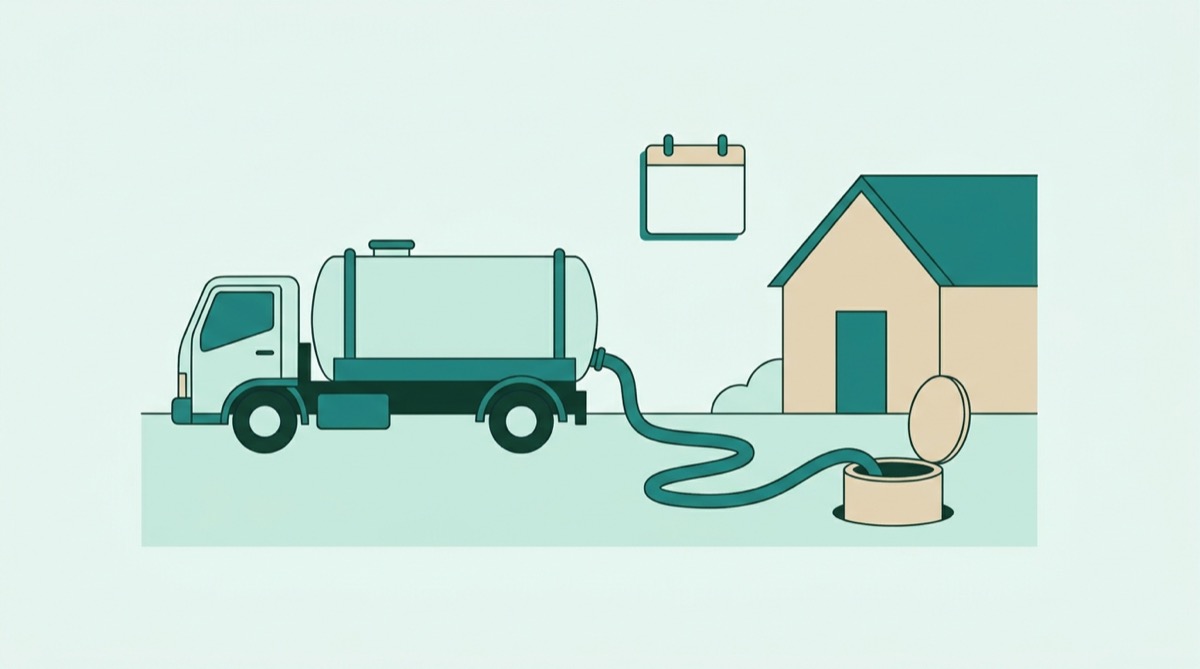
There is no single schedule. Most guidance for home systems falls in the range of every two to five years, but the right time for your aerobic system depends on how much sludge has built up, which tank you are talking about, and how your household uses water. The reliable approach is to have sludge measured at service visits and pump when the measurement says so.
What the main sources say
| Source | Guidance |
|---|---|
| U.S. Environmental Protection Agency | Household septic tanks are typically pumped every three to five years. |
| Texas A&M AgriLife Extension, septic FAQ | About every three to five years, before sludge or scum reaches the tank’s outlet. |
| Texas A&M AgriLife Extension, spray systems | Have the pump tank pumped periodically, usually when the treatment system is serviced, probably every two to three years. |
| Norweco, Singulair Green manual | Under normal use only the pretreatment chamber is pumped, normally at three to five year intervals. |
These are consistent with each other. They are also ranges, not appointments. Your own manual and your provider’s measurements come first.
Which tank gets pumped
A typical residential aerobic system has several compartments: a trash or pretreatment tank, the aeration chamber with its clarifier, and a pump tank. They do not fill with solids at the same rate.
- Trash or pretreatment tank: this is where most solids settle, so it is the one that most often needs pumping.
- Aeration chamber: your provider inspects its contents. Whether and when it is pumped depends on the manufacturer’s instructions.
- Pump tank: it should hold fairly clear water, but solids accumulate over time. Texas A&M suggests it is pumped periodically along with service.
Ask the pumper and your maintenance provider which compartments they intend to pump and why. Norweco tells owners to contact the dealer before pumping for information on removing equipment and reaching individual chambers. That is good practice with any brand, because an aerobic tank has equipment inside it that a pumper can damage.
Pump by measurement, not by the calendar
EPA gives two measurements that mean a septic tank is due: the bottom of the scum layer is within six inches of the bottom of the outlet, or the top of the sludge layer is within twelve inches of the outlet.
On an aerobic system, sludge is checked at service visits. Oklahoma’s rule, for example, requires the installer to measure and record sludge depth in the trash tank at least every six months during the first two years. Ask your provider to write the sludge reading on each report. A few readings in a row show you how fast your household fills the tank.
What makes you need pumping sooner
- A garbage disposal. Texas A&M’s FAQ says it may shorten the pump-out interval by one to two years.
- Wipes, cat litter, coffee grounds and other things that do not break down. See what not to put down the drain.
- More people than the system was sized for.
- Water-saving fixtures. This one surprises people. Texas A&M notes they make the wastewater stronger, which can overload the unit organically and mean sludge has to be removed more often.
- Lotion-treated toilet paper, which forms a thick scum layer.
Signs it may be overdue
- Your provider’s report shows sludge rising visit after visit.
- Solids or cloudy water are reaching the pump tank or clogging spray heads.
- Odor that persists with the aerator running. See aerobic septic smells.
- Slow drains throughout the house.
None of these proves the tank is full, and each has other causes. They are reasons to ask for a sludge measurement.
Who can pump it
Use a pumper licensed or registered where you live. In Texas, only transporters registered with the Texas Commission on Environmental Quality may pump and haul sludge. TCEQ keeps a searchable list of registered sludge transporters.
Never open or enter a tank yourself. Septic tanks can contain toxic gases and too little oxygen.
On pumping day
- Tell your maintenance provider the date. Ask whether they want to be there or have instructions for the pumper.
- Confirm which compartments will be pumped.
- Ask the pumper to note the sludge and scum depths before pumping and the condition of baffles and tank walls.
- Get a receipt that shows the date, gallons removed and the transporter’s registration. Keep it with your system records.
- Make sure every lid is secured before the truck leaves.
An alarm right after pumping can be normal
An empty tank can trigger an alarm until it refills. Hoot’s technician guide, for instance, lists “tank has been recently pumped out and not refilled yet” as one reason for an aeration alarm on its panels. See the Hoot control panel lights guide. Ask the pumper and your provider whether your tanks should be refilled with water after pumping and how the system should be restarted. Do not assume the alarm is harmless: if it continues after the tank has refilled, call your provider.
What it costs
Prices depend on your area, the number and size of compartments, how easy the lids are to reach, and disposal fees. We do not publish a national figure because the ones in circulation do not come from sources we can verify. Get two or three local quotes and ask each one:
- Is the price per tank, per compartment or per gallon?
- Does it include locating and uncovering lids?
- Are disposal fees included?
- Is there an extra charge for an aerobic system?
If lids are buried, risers make every future visit quicker. For the wider budget, see aerobic septic maintenance cost.
Sources
- U.S. Environmental Protection Agency: How to Care for Your Septic System, for the three to five year range and the scum and sludge measurements.
- Texas A&M AgriLife Extension: On-Site Sewage Facilities, Frequently Asked Questions, for pumping frequency, garbage disposals and registered pumpers.
- Texas A&M AgriLife Extension, L-5303, Spray Distribution System, for pump tank pumping.
- Texas A&M AgriLife Extension, B-6234, Living with an Aerobic Treatment Unit and Spray Field, for water-saving fixtures and materials that add sludge.
- Norweco, Singulair Green Owner’s Manual, for one manufacturer’s pumping interval and pre-pumping instructions.
- Oklahoma Administrative Code 252:641-10-3, for six-monthly sludge measurement.
- Hoot Systems, Panel Trouble Shooting Guide (PDF on the manufacturer’s site), for the alarm after pumping.
General homeowner education only. Your system manual, your maintenance provider and your local authority control the correct schedule and procedure for your installation.
Last reviewed: November 10, 2026.